 Arctic Council Working Group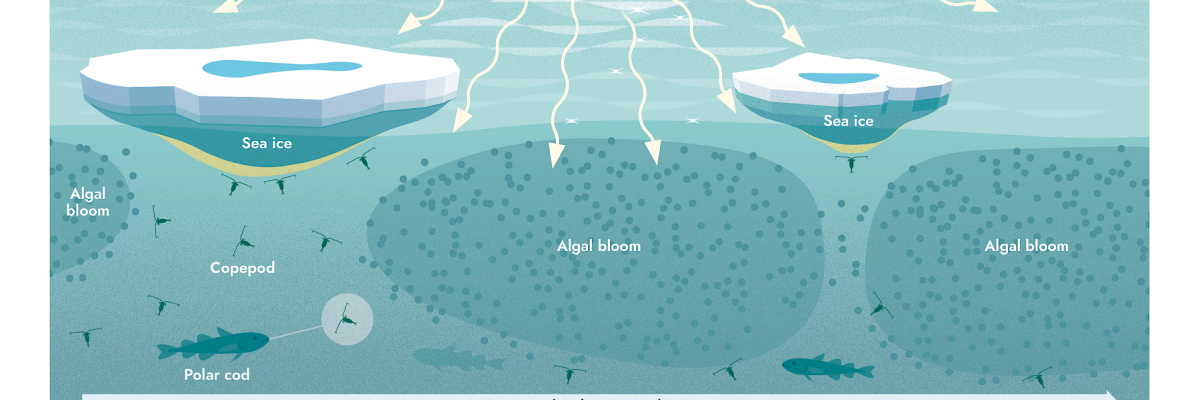
New special issue highlights accelerating climate impacts on Arctic ecosystems
2026-06-03
CAFF and AMAP are pleased to share the Special Journal Issue Climate change impacts on Arctic ecosystems and associated climate feedbacks published in Frontiers in Environmental Science that brings together the latest research on how climate change is reshaping Arctic ecosystems and how those changes can, in turn, influence the global climate system. The collection, titled Climate change impacts on Arctic ecosystems and associated climate feedbacks, presents 11 peer-reviewed reviews and an editorial synthesis from more than 100 scientists across the Arctic research community.
The special issue is the latest outcome of a joint AMAP–CAFF effort launched in response to the Arctic Council’s 2019 recognition that climate change is affecting Arctic ecosystems, ecosystem services, and the livelihoods that depend on them. The publication synthesizes current knowledge across marine, terrestrial, freshwater, and atmosphere–ecosystem interactions, while identifying priorities for adaptation and resilience.
Key findings:
Marine ecosystems: The collection highlights major shifts already underway in Arctic seas. Sea-ice loss has contributed to a 57% increase in Arctic Ocean net primary production between 1998 and 2018, while marine heatwaves and the northward movement of species are changing food webs and ecosystem dynamics. These changes have important consequences for Arctic biodiversity and for Indigenous and coastal communities that rely on healthy marine ecosystems.
Terrestrial and freshwater ecosystems: On land, decades of tundra greening are now occurring alongside thawing permafrost, more intense wildfire seasons, and changing hydrology. Together, these changes are altering the carbon balance of northern landscapes. The special issue notes that the 2023 wildfire season in Canada’s Northwest Territories was the most severe since records began in 1965, with more than four million hectares burned.
Atmosphere–ecosystem feedbacks: The publication also underscores the importance of Arctic-Boreal wetlands, lakes, and soils in the global climate system. These ecosystems emit an estimated 48.7 Tg of methane annually—around one quarter of natural methane emissions worldwide. When disturbances and lateral flows are taken into account, it is now uncertain whether the Arctic-Boreal region as a whole is a net sink or source of carbon dioxide.
Across the special issue, the authors emphasize that many Arctic systems are approaching—or may already be nearing—tipping points beyond which change could become difficult to reverse. The editorial synthesis identifies three priority areas for action: stronger coordinated pan-Arctic monitoring, ecosystem-based management, and pathways developed jointly by scientists, policymakers, and Indigenous Knowledge holders.
The compilation was edited by Torben R. Christensen, Per Fauchald, and Marie Frost Arndal, with the editorial synthesis co-authored by Tom Christensen. The work was supported by AMAP/CAFF support funds from the Danish Ministry of Climate, Energy and Utilities.
The full special issue is available online through Frontiers in Environmental Science and as an open eBook compilation. A series of supporting graphics is also available through the Arctic Biodiversity Data Service (ABDS).